Why UK Authorities Require Certified Passport Translation (Even When It Contains English)
Understanding UKVI, Home Office, and UK court requirements for passport translation — a complete guide for visa applications, immigration, and legal proceedings
Many residents in the UK from countries around the world face a puzzling situation: when submitting documents to British government agencies, they're asked to provide an official translation of their passport, even though all the text is already duplicated in English. Why translate something that's already translated? Let's explore the reasons behind this requirement.
Who Needs Passport Translation in the UK?
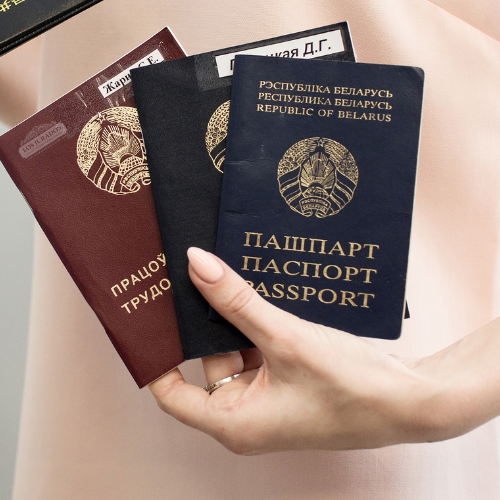
This applies not only to Russian-speaking residents but to anyone whose passport's main page is in their national language — especially if it's not written in Latin script. This includes passports from:
Countries using Cyrillic script: Belarus, Russia, Ukraine, Serbia, Bulgaria, North Macedonia, Kazakhstan, Kyrgyzstan, Tajikistan, Mongolia
Countries using Arabic script: Saudi Arabia, UAE, Egypt, Iraq, Iran, Afghanistan, Pakistan, Morocco, Algeria, Tunisia
Countries using other non-Latin scripts: China (Chinese characters), Japan (Kanji/Hiragana/Katakana), South Korea (Hangul), Thailand (Thai script), Georgia (Georgian script), Armenia (Armenian script), Greece (Greek alphabet), India (Hindi/Devanagari and other scripts), Bangladesh (Bengali script), Sri Lanka (Sinhala/Tamil scripts)
Even if these passports contain English transliterations of names and key data, the primary information remains in the national language and script.
Understanding UK Passport Translation Requirements
The Legal Status of the Document
The main reason lies in the legal nature of the document itself. A passport issued in Russia, Ukraine, or another country is an official document of that particular state. Even if it contains English text, this translation is for reference purposes only and carries no legal weight in the United Kingdom.
British authorities cannot officially recognise a translation performed by a foreign government without additional verification. They require assurance that the translation has been completed by a qualified specialist who takes responsibility for it and can be held accountable if needed.
The Certified Translator's Responsibility
When you order a certified translation, you're not just paying for someone to rewrite text that's already visible in your passport. You're paying for:
Professional accountability - The translator confirms the accuracy of all information and takes legal responsibility for the translation. If any discrepancies arise, there's a specific person or company to address.
Official certification - The translation comes with the translator's stamp, signature, and contact details, making it a legally recognised document in the UK system.
Compliance with standards - Certified translators follow specific formatting and terminology requirements that may differ from the standard translation in your passport.
Not All English Translations Are Equal
The English text in foreign passports is often a simplified transliteration rather than a full legal translation. For example:
- Russian names may be transliterated differently depending on the system used (ГОСТ, ICAO, or other standards)
- Some fields may be abbreviated or omitted in the passport's English section
- Dates, place names, and official terms may not match UK terminology standards
- Handwritten entries or stamps may not have English equivalents at all
A certified translator ensures that all information is presented in the format and terminology expected by British institutions.
What Parts of Your Passport Aren't in English?
Yes, many passports do include English transliteration for key details like name, surname, date of birth, and nationality. However, the majority of passports from countries using non-Latin scripts contain significant elements that remain untranslated:
Personal information in the national language - Your full name, patronymic (in Slavic countries), and other details appear in Cyrillic, Arabic, Chinese characters, or other scripts
Issuing authority details - The names of government bodies and departments that issued the passport are written in the national language
Place of birth - Cities and regions are often written only in the national script (e.g., Arabic for Middle Eastern countries, Cyrillic for Russian-speaking countries, Chinese characters for China)
Stamps and endorsements - Official seals, entry/exit stamps, and administrative marks in Arabic, Cyrillic, Thai, Hindi, or other scripts
Additional pages - Visa pages, amendments, and inserts often contain untranslated text in the national language
Section headings and labels - Field names like "Nationality," "Date of Issue," and other descriptive text in non-Latin alphabets
All of these elements must be translated in full, even if some key data is duplicated in English. For passports from countries like China, Japan, Thailand, or Arab nations, the vast majority of the document's text is in a completely different writing system, making certified translation essential for UK authorities to process your application.
UKVI and Home Office Require Complete Translation
This isn't about translating just the parts that aren't in English. UKVI and the Home Office treat your passport as a single, unified document where:
- Every line must be translated
- All stamps and seals must be described
- The translator must certify the completeness and accuracy of the entire translation
This requirement is standardised in Home Office Guidance. Caseworkers review documents according to strict protocols: if even a single line remains untranslated, your application may be rejected.
Translation Is Certification, Not Just Text Conversion
Even if you believe "everything is clear already," UKVI requires a formal certified document that includes:
- The translator's signature
- The date of translation
- The translation company's registration details
- A statement of truth confirming accuracy
- Professional credentials and contact information
This isn't "translation for translation's sake" — it's an official certification process that creates a legally recognised document. The English text already present in your passport doesn't carry this certification.
Protection for Both Parties
This requirement protects not only government agencies but also you as the applicant. An official translation creates a clear paper trail and eliminates potential disputes about what information was actually provided. If questions arise about your documents, there's a certified translation that can be referred to as the authoritative version.
When Is a Certified Passport Translation Required in the UK?
You'll typically need a certified translation of your passport for:
Immigration and visa applications:
- UK visa applications (visitor, work, student visas)
- Indefinite Leave to Remain (ILR) applications
- British citizenship applications
- Spouse visa and family reunion applications
- Home Office submissions
Legal proceedings:
- County Court cases
- Magistrates Court proceedings
- Family Court matters
- Solicitor requirements for legal representation
Civil and administrative matters:
- Marriage registration in the UK
- Birth certificate applications
- Opening business bank accounts
- Certain employment situations (regulated professions)
- University and educational institution admissions
- Property transactions and mortgage applications
- Driving licence applications
UK Courts Make No Exceptions
In County Court, Magistrates Court, and Family Court, passport translation is standard practice — even when the passport contains English letters. The UK legal system operates on the principle that all evidence must be presented in a certified, verifiable format. The court cannot rely on unofficial translations, regardless of how clear the document may appear.
Caseworkers Work Strictly by the Rules
Home Office officers and legal professionals don't have the discretion to accept partial translations or make judgements about what's "clear enough." They follow standardised procedures:
- If any line is untranslated, the document may be rejected
- If the certification is incomplete or improperly formatted, it won't be accepted
- If the translator's credentials aren't properly documented, the translation is invalid
For a caseworker reviewing dozens of applications daily, only one thing matters: does this document meet the official requirements? Partial English text in your original passport doesn't change their obligation to follow procedure.
How to Obtain a Certified Passport Translation in the UK
The process is straightforward. You need to contact a certified translation agency or an individual translator who is qualified to provide certified translations in the UK. The translator will:
- Translate all required pages of your passport (usually the main pages with your photo and personal data, plus any pages with stamps or endorsements)
- Certify the translation with their signature and official stamp
- Provide credentials including their contact details, qualifications, and professional information
- Attach the certification statement confirming accuracy and completeness to the translation
- Include company registration details (for translation agencies)
The completed certified translation will meet UKVI, Home Office, court, and solicitor requirements.
Why Choose Professional Certified Translation Services?
Working with an experienced translation agency ensures:
- UKVI compliance - translations meet all Home Office guidelines
- Fast turnaround - typically 1-3 business days
- Acceptance guarantee - properly formatted for UK authorities
- Professional accountability - legal responsibility for accuracy
- Expert knowledge - understanding of UK immigration and legal requirements
Conclusion
While it may seem redundant to translate a passport that already contains English text, this requirement serves an important legal function. Your passport needs a certified translation because UKVI and the Home Office require a complete, certified translation of all elements of the document — including stamps, Cyrillic inscriptions, and data fields — even if some information is duplicated in English. This is standard practice in the United Kingdom.
The requirement ensures accuracy, accountability, and compliance with UK standards. Rather than viewing it as bureaucratic red tape, consider it a safeguard that protects your interests and ensures your documents are properly recognised by British authorities. The English text in your passport simply isn't enough to meet the legal standards for certification that UK institutions require.
Need a certified passport translation for UKVI, Home Office, or UK courts?
Contact Los Jurados UK for professional certified translation services that meet all UK requirements.
Phone: +44 7350 228 308
Email: info@lsojurados.uk
We provide fast, accurate certified translations for visa applications, immigration procedures, legal proceedings, and all official UK purposes.
Los Jurados UK is a brand owned by ATCG Tolkeburoo OÜ (Estonia), registration number 12173332, registered at Estonia pst 1/3–323, 10413 Tallinn, Estonia. ATCG Tolkeburoo OÜ is the authorised entity for the provision and sale of certified translation services in the United Kingdom under the Los Jurados UK brand.